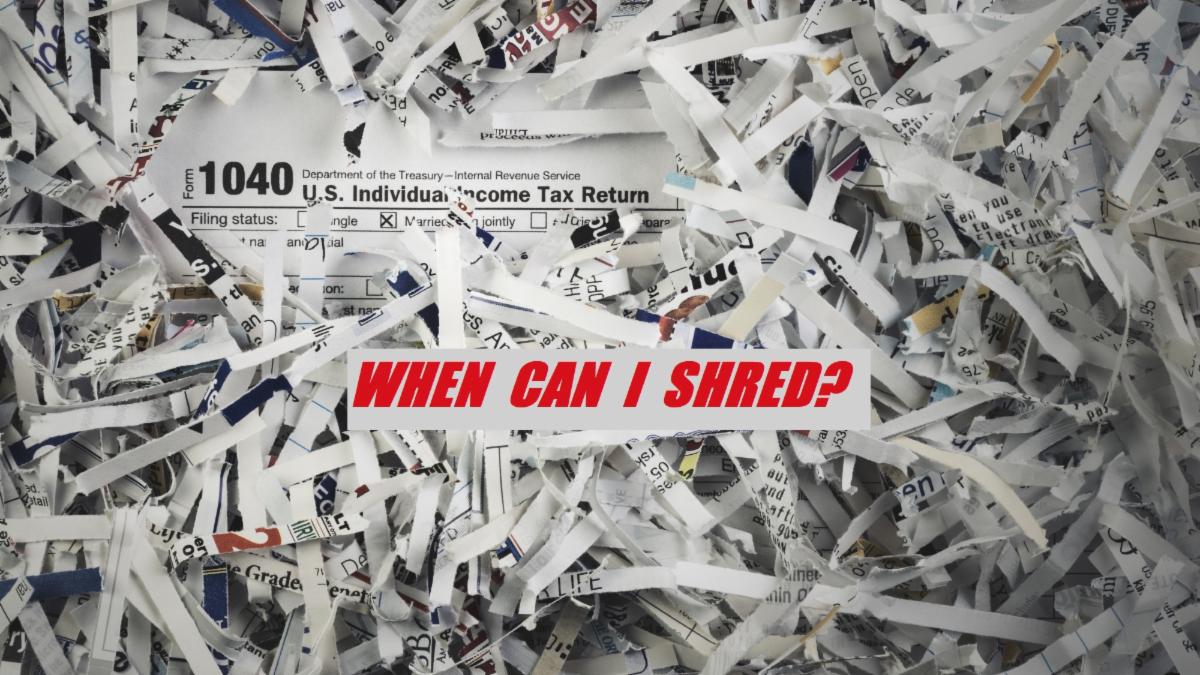
Here is the answer you‘ve been waiting for to one of the most common questions asked of CPAs post-tax season. Which tax documents and financial papers out of the seemingly endless piles of information, do folks need to keep?
Generally, keep records that support an item of income, a deduction, or a credit shown on your tax return, until the period of limitations for that tax return runs out. The IRS is one of the few courts where failure to produce proof of your claims results in the assumption that you are guilty of tax fraud. So save all the financial documents you used to create your taxes to defend yourself in an audit.
As for how long you need to keep these records, the IRS uses a period of limitations. The period of limitations is the time in which you can amend your tax return to claim a credit or refund, or the IRS can assess additional tax. The information below reflects the periods of limitation that apply to income tax returns. Unless otherwise stated, the years refer to the period after the return was filed. Returns filed before the due date are treated as filed on the due date.
Period of Limitations that apply to income tax returns:
- Keep records for 3 years if situations (4) and (5) below do not apply to you.
- Keep records for 3 years from the date you filed your original return, or 2 years from the date you paid the tax, whichever is later if you file a claim for credit or refund after you file your return.
- Keep records for 7 years if you file a claim for a loss from worthless securities or bad debt deduction.
- Keep records for 6 years if you did not report income that you should have, and it is more than 25% of the gross income shown on your return.
- Keep records indefinitely if you did not file a return.
- Keep employment tax records for at least 4 years after the date that the tax becomes due or is paid, whichever is later.
Here are some helpful things to think about to assist you in making decisions about storing or deleting documents:
Were the documents used for your tax return?
For an individual tax return, you’ll want to save anything that supports the figures you entered on your return. You should keep the W-2 and 1099 forms you get from employers, for example, as well as any 1099-B or 1099-INT tax documents from banks, brokerages, and other investment firms. Consider keeping your 1040, as well as income statements and any records of tax-deductible expenses.
Are the records connected property?
Residential records should be kept, even if they aren’t used for immediate tax-filing deduction purposes. They will come into play when you sell, due to potential tax consequences, and these documents could help make sure it’s as small as possible. Also hang onto all documents that show improvement costs made to your home, since they are added to your home’s basis, which could help to lower potential tax.
Are you self-employed or own a small business?
Businesses should keep their journal entries, profit and loss statements, financial statements, check registers, and general business ledgers permanently. This is generally not a problem with online software and files regularly backed up in the cloud. Be aware the IRS may request your company QuickBooks file as a part of an audit. Aside from supportive tax records, other documents such as accounts payable/receivable ledgers, invoices, and expense reports should be retained for a minimum of 7 years.
Does your business have employees?
The IRS suggests that you retain all employment tax records for a minimum of 4 years after the date those taxes were due or were paid, whichever is later. These employment tax records include the employer identification number, amounts and dates of wage, annuity, and pension payments and tax deposits, the names, addresses, social security numbers, dates of employment and occupations of employees, and records of allocated tips. Think about keeping records of employee benefits, pension payments, or profit-sharing plans permanently. Click HERE for more information regarding employment taxes.
Do you have any loans?
If you have loans or are responsible for paying off student loans, keep all records at least until you have paid off the loan. You may even want to think about indefinitely keeping the loan records in the event anyone questions whether you paid it off or not.
How should you store your documents?
Scan before you shred! As technology gets more advanced, we gain more ways to safely store our most important documents. Digital methods like flash drives are an option, as well as the cloud with strong passwords. Scanning documents into PDF format is a great option too. Storing files digitally helps with accessibility and recovery if there is a natural disaster or other event that could put hard copies in danger. Be sure to also perform routine backups of all systems, and make sure that other protections like firewalls and anti-virus are in place. If you ever want access to a previous year’s tax return, use this IRS link HERE to access tax records from an online account.
In summary: Tax returns and supporting documentation must be kept for at least seven years. The IRS can audit your return for up to three years from your filing date, but if the IRS suspects you underreported your gross income by 25% or more, they have up to six years to challenge your return. If the IRS suspects you filed a fraudulent return, no statute of limitations applies. For more information, reference our previous article about deleting financial records HERE.
Contact us: When in doubt, scan and save before you shred! Managing digital files is similar to managing paper files. Companies must have standards for creating, filing, and eventually purging the file. There may be times when you must suspend your usual record disposal plans, such as when litigation is likely, or a business matter is pending. You may wish to consult with your TFG tax professional to guide you or your business on its record-keeping and disposal policies. Call us toll-free at 855-542-7537