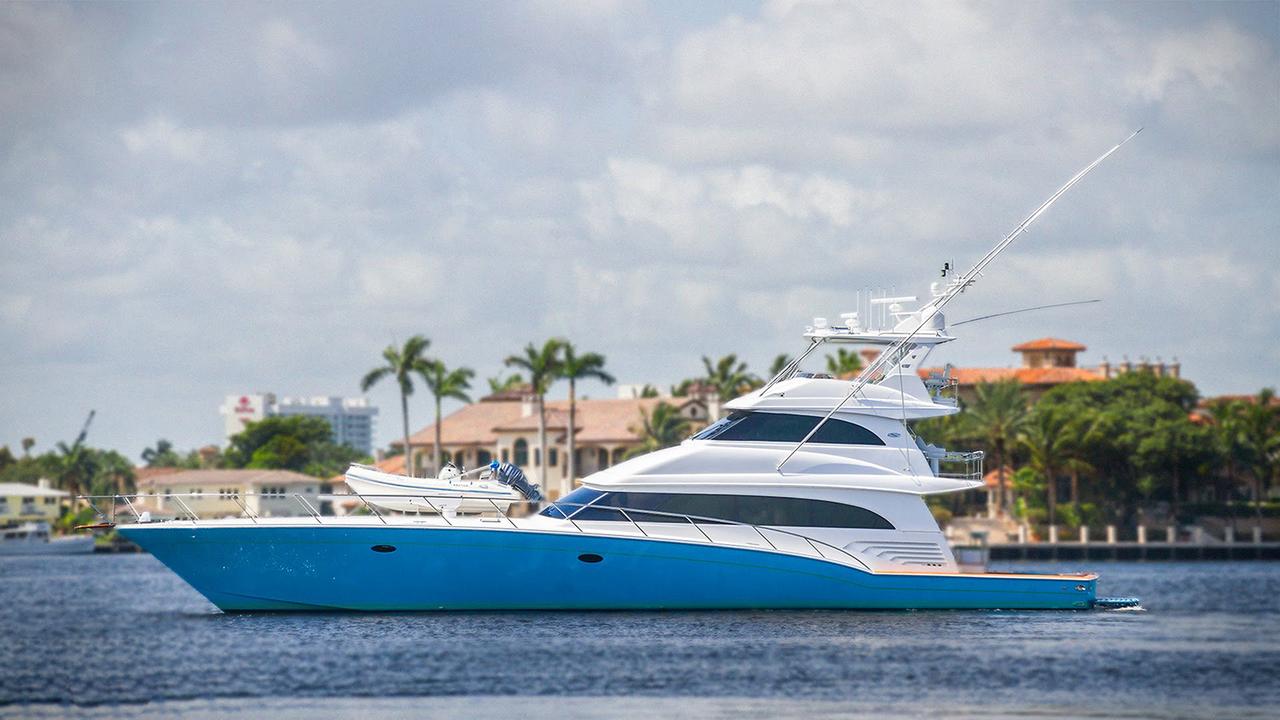
Having a yacht can be a great way to unwind while entertaining friends, family and clients, but turning a part time passion into a full time business can have unintended consequences and impact your tax bill. Here’s what you need to know so you won’t be drowning in tax liability.
The IRS Disinguishes Between Passive Investments and Active Businesses
Tax law makes a distinction between different types of income including income from passive investments and active businesses in which the taxpayer materially participates. Whether or not you qualify as a material participant determines the extent to which you are allowed to deduct losses on your tax return.
In order to qualify as a business you need to participate in all “Significant Participation Activities” and your participation must qualify as Material Participation, which means you participated in a regular, continuous and substantial basis.
According to the IRS, a trade or business is considered a passive activity unless the taxpayer Materially Participates.
Take The Test
For purposes of the passive activity rules, you materially participated in the operation of this trade or business activity during the year if you meet any of the seven following tests:
2. You do all, or nearly all, of the work in the activity (which you probably will not do).
3. You participated in the activity for more than 100 hours during the tax year, and that participation is at least as much as any other person for the tax year (including individuals who did not own any interest in the activity). Not the aggregate of all of the participants. Signing up with a Charter Company will provide you a combination sales associates, brokers and others who help in the office or at boat shows, cleaning people, captains, stand by emergency personnel and a all of the service people for routine, and specialized services. Combined these individuals will likely spend more than 100 hours, but any one will not. So, if you do participate 100, you will qualify.
4. The activity is a significant participation activity (SPA) for the tax year, and you participated in all SPA and the sum of all of the SPAs in which you work 100-500 hours exceeds 500 hours for the year.
5. You materially participated in the activity for any 5 of the prior 10 tax years.
6. The activity is a personal service activity and you materially participated for any 3 prior tax years. A personal service activity is an activity that involves performing personal services in the fields of health, law, engineering, architecture, accounting, actuarial science, performing arts, consulting, or any other trade or business in which capital is not a material income-producing factor.
7. Based on all the facts and circumstances, you participated in the activity on a regular, continuous, and substantial basis during the tax year. But you do not meet this test if you participated in the activity for 100 hours or less during the tax year.
Setting up a LLC helps further the contention of a legitimate business. A partnership format is the least audited entity.
You need to keep a detailed activity log.
If your boat is in service, you may write off any qualified deductions including depreciation and any 179 expenses against income from the business, or write it off against ordinary income from the active conduct of a trade or business or other ordinary income. To the extent there is not enough ordinary income, you may carry the loss forward.
First year specifics: You need to have the boat in service the year you claim to be in business. This does not mean you have to earn income. You just need to have the boat “Ready and available” for it’s intended purpose. (Service agreement, Sales Associate agreement, and/or website and administrative paperwork in place).
Service Agreement Dos and Don’ts
Your agreement with a charter company should be called a “Service Agreement,” not a Management agreement. IRS frowns on the term, “management agreement.”
• You must maintain care/custody and control of your yacht by retaining the right to charter the boat himself, or work with multiple brokers.
• You must retain the right to use the yacht yourself and are not required to lease the boat back.
• You should have a (separate) “Sales Associate”, written agreement in place with selling the charter company. This facilitates a second stream of income from referrals, demos, sailing courses and captained charters.
• The Service Company should provide services “ala‐cart” and not exclusively.
• The Service Agreement should be seasonal and/or for less than a year. Can be renewable, but not automatic.
• The Service Agreement should not guarantee income.
Section 179 Deduction Opportunity
1. For 2019, under Section 179 of the Internal Revenue Code, you can take a one-time expense deduction in the year of purchase equal to the purchase price of your yacht up to a maximum deduction of $1,000,000. This benefit is reduced for yachts priced over $2,500,000; plus
2. Bonus depreciation deduction for 2019 is equal to 100% of the amount of the purchase price over the $1,000,000 section 179 maximum deduction; plus
3. You can depreciate the adjusted cost basis of your yacht (the balance of the purchase price after deducting the Section 179 expense deduction and bonus depreciation deduction) over 10 years; plus
Cash savings (assuming no carryover) on purchase price of $2,500,000 versus $2,600,000
| Purchase Price | $2,500,000 | $2,600,000 |
| Section 179 Deduction | $1,000,000 | $900,000 |
| Bonus Depreciation | $1,500,000 | $1,700,000 |
| 1st Year Depreciation |
$0 |
$0 |
| Total 1st Year Deduction | $2,500,000 | $2,600,000 |
| Cash Savings (35% bracket) | $875,000 | $910,000 |
In Conclusion: If you are yearning to turn your yacht, or any other expensive hobby, into a money maker instead of a drain on your bank account, beware the risks, IRS rules, and federal/state regulations – and remember you need a tax planning strategy for success!