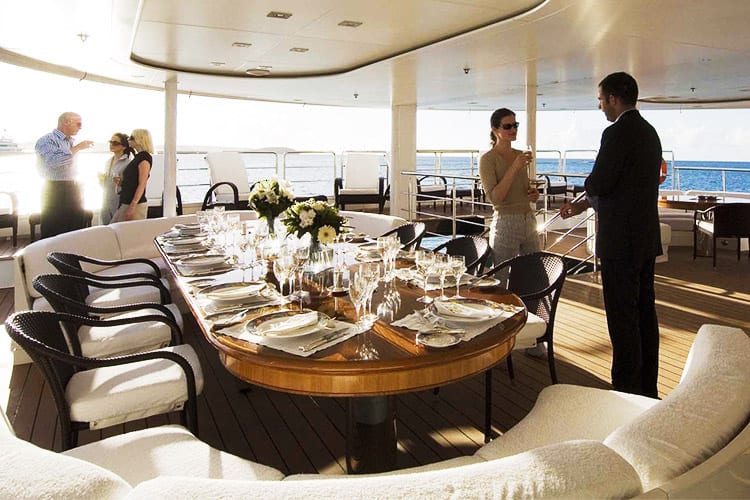
Fortunately for boat lovers, tax reform did not destroy all the benefits of boat ownership. Sure the love of the ocean breeze, inter-coastal sightseeing, fishing and water skiing on the lake are enough to bind a captain to his beloved vessel, but tax breaks make owning a boat a lot easier on the pocket book.
Unfortunately, one can no longer deduct any expense for the use of an “entertainment facility,” which is what the IRS considers a boat or yacht. This would include deducting expenses for depreciation and operating costs, maintenance, etc. You can only deduct the out-of-pocket expenses for food and beverages, catering, gas, and fishing bait. But be sure to document that the expenses are directly related to your business, and remember that only up to 50% of eligible expenses may now be deducted!
So how do you get Uncle Sam to help you float your boat? Depends on business versus personal use. These are the rules to keep in mind:
2. Bonus Depreciation is useful to a business spending more than the Section 179 cap of $2.5million. Section 179 is generally taken first, followed by Bonus Depreciation – unless the business had no taxable profit, in which case it is allowed to carry the loss forward to future years.
3. You are able to depreciate the adjusted cost basis of your vessel or yacht used for business purposes, which is the balance of the purchase price after the Section 179 expense deduction and the 50% bonus depreciation deduction – over 10 years.
4. If operating the boat for strictly business purposes like a charter, then gasoline, maintenance, mooring fees, insurance, and repairs can be included in the deductible expenses. However strict documentation is required to prove you are using the boat more than 50% of the time for business rather than personal use.
5. Same 50% rule above applies if using the boat for business transportation. Your potential tax deductions would then include fuel costs, insurance, repairs, dock or slip fees, caretakers’ salaries, hurricane storage, and depreciation, including Section 179. Make sure the vessel is used solely for business travel, or you will encounter a trigger for the “entertainment facility” rules. Keep in mind that tax law places a daily limit on deductions for business transportation by water.
6. The double edged sword is that if you establish the boat as a business asset, then you must pay taxes on the benefits of using it personally.
7. Beware the “hobby loss” rules! To avoid IRS scrutiny when buying a boat for business, you must show that you intend to make a profit, and document that profit to prove you are not just operating a fishing charter as a hobby for fun.
8. Declaring your boat a second home may allow you to deduct the interest on your boat loan when using the vessel for recreation. It must have a sleeping berth or quarters, cooking facilities or galley, and a head or a toilet even if it is only portable. If you used an equity line of credit with your home or the boat as security, you’re entitled to deduct those interest charges. If you already have a second home, you’re out of luck!
9. Thinking of renting your floating home out to others? You will have to stay on it for at least 14 nights out of the year, or 10% of the number of days the boat was rented.
10. If you itemize, you can deduct not just the interest, but also any points paid to get the loan and even the penalty for an early payoff.
11. Consider donating your old boat to charity when shopping for a new model or upgrade, it may be more beneficial than selling it. The IRS allows you to deduct the market value of your boat on the day you donate it. 12. If you boat in a state with a fuel tax, you may be eligible for a marine fuel tax refund.
CONTACT US: Let our marine tax experts assist you and answer your questions BEFORE YOU BUY! If you’re going to use your boat or yacht for entertaining customers, vendors, or business associates, be sure you know which expenses are deductible. If you declare your boat a second home, we can help with IRS Form 1098 and the interest deduction. If you have limited time to use your boat or yacht and are willing to consider a charter management program, you may reduce the costs of purchasing and owning your yacht significantly through a combination of tax deductions, new Section 179 & Bonus Depreciation, and charter income. Contact us toll free at 855-534-2727.