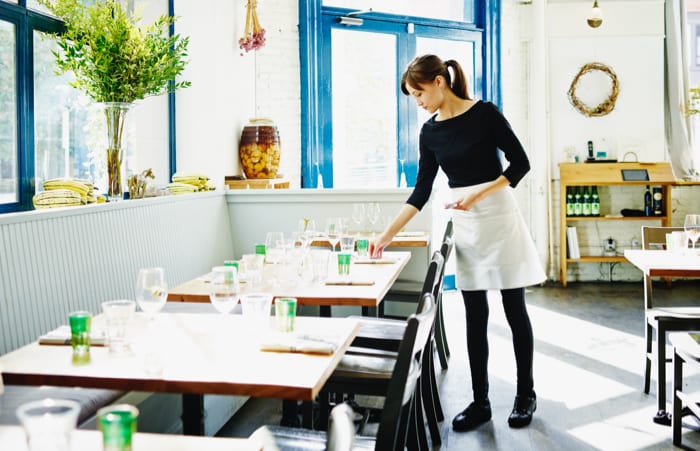
The American Rescue Plan Act allocated an additional $7.25 Billion for PPP forgivable loans for small businesses and earmarked targeted grants to those hardest hit by pandemic-related economic slowdowns. Restaurants and bars are among the businesses most hurt by the stay-at-home and social-distancing restrictions imposed during the pandemic, and now have a “seat at the table.” The $28 Billion Restaurant Revitalization Fund was created to help businesses in the food services sector get back on their feet.
In addition to restaurants and bars, other entities eligible for support from the RRF include:
- Caterers,
- Food Stands,
- Food Trucks,
- Inns,
- Taverns,
- Lounges,
- Brewpubs, and
- Any licensed facility or premise of a beverage alcohol producer where the public may taste, sample, or purchase products, or other similar place of business in which the public or patrons assemble for the primary purpose of being served food or drink.
The act allows for grants equal to the pandemic-related revenue loss of the eligible entity, up to $10 Million per entity, or $5 Million per physical location. The grants are calculated by subtracting 2020 revenue from 2019 revenue. Entities are limited to 20 locations. (Publicly traded companies are not eligible).
The grant funds may be used to pay for the following eligible expenses:
- Payroll costs;
- Principal and interest payments on a mortgage, not including any prepayments on principal;
- Rent payments, not including prepayments;
- Utilities;
- Maintenance expenses including construction to accommodate outdoor seating and walls, floods, deck surfaces, furniture, fixtures, and equipment;
- Supplies including personal protective equipment and cleaning materials;
- Food and beverage expenses within the eligible entity’s scope of normal business practice before the covered period, which runs from February 15, 2020, through December 31, 2021, or another date as determined by the SBA;
- Covered supplier costs;
- Operational expenses;
- Paid sick leave; and
- Any other expenses the SBA determines to be essential to maintaining the eligible entity.
The plan requires applicants to make a good-faith certification that the uncertainty of current economic conditions makes the grant request necessary to support the applicant’s ongoing operations and that the applicant has not also applied for or received a Shuttered Venue Operator grant.
The plan sets aside over $5 Billion for eligible applicants with 2019 gross receipts of $500,000 or less. The bill also charges the SBA with awarding the other $20 Billion in grants in “an equitable manner to eligible entities of different sizes based on annual gross receipts.”
During the first 21 days of the grants, the SBA will prioritize applications from restaurants owned and operated or controlled by women, veterans, or socially and economically disadvantaged individuals.
Restaurant Revitalization Grants are not taxable. Further, recipients are not denied any tax deduction, their tax attributes are not reduced, and they are not denied any tax basis increase as a result of the tax-free nature of the grant. Simply put, not only are the grants tax-free but no adverse tax consequence (or quid pro quo) arises by reason of the grant being tax-free. Finally, APRA provides that the grant is treated as tax exempt income for S-corporations (unless the Treasury Department or the IRS provides otherwise), and directs Treasury and the IRS to write rules to determine the portion of any grant allocable to a partner.
Reach Out To Us: It remains to be seen how soon the SBA will launch and begin accepting applications for the Restaurant Revitalization Grant Program. The fact that the SBA is still not yet processing applications for the Shuttered Venue Operator grant program, which was created nearly three months ago on December 27, 2020, suggests that the implementation of the Restaurant Revitalization Grant Program may be slow. Be sure to check with for further updates, including any application forms at 855-542-7537 or CPA@Fuoco.com.